Start, stop, continue: examples for leadership teams
How to run a start, stop, continue exercise at a leadership offsite so it produces decisions rather than a wall of sticky notes — with worked examples and the rules.
Start, stop, continue is one of the most widely used retrospective formats in management, and one of the most often run badly. It is three questions on a whiteboard. That is its strength — anyone can run it — and its weakness, because anyone does, and usually in a way that produces forty sticky notes and no decisions.
This is how to run it at a leadership offsite so that it produces something the team is still using a quarter later.
The three questions, stated properly
Start: what should this team begin doing that it does not do now?
Stop: what does this team do that costs more than it returns?
Continue: what is working and would be lost if nobody protected it?
The phrasing of the third question matters. “Continue” invites a list of things people like. “Would be lost if nobody protected it” asks which working habits are fragile — which is the useful question, because the things that are working are usually the first to be dropped when the team adds something new.
Examples, and what makes them usable
The difference between a start, stop, continue that changes something and one that does not is almost always the specificity of the items.
| Vague — changes nothing | Specific — can be checked next month |
|---|---|
| Start: communicating better | Start: every decision taken in the weekly leadership meeting is minuted with a named owner before the meeting ends |
| Start: being more strategic | Start: the first thirty minutes of the monthly meeting are on one forward-looking topic, chosen a week in advance, with no operational updates |
| Stop: micromanaging | Stop: approving spend below AED 25,000 at director level when the budget holder has already signed |
| Stop: too many meetings | Stop: the Tuesday status meeting — its content moves to a written update |
| Continue: good teamwork | Continue: the Thursday pipeline review, because it is the only meeting that ends with actions |
| Continue: open door policy | Continue: new joiners meeting each leadership team member one-to-one within their first month |
The test for each item is simple: could someone outside this team check, a month from now, whether it happened? If not, it is a sentiment, not a commitment.
For an individual leader
The same three questions work as upward or 360-degree feedback, asked of the people who work with one leader. Examples of what comes back when it is done well:
- Start: telling the team the reason behind a decision, not only the decision.
- Start: saying “I don’t know yet” rather than deferring the question to the next meeting.
- Stop: replying to emails after 22:00 — the team reads each one as an expectation.
- Stop: rewriting documents at the final stage instead of commenting at the first draft.
- Continue: the fortnightly one-to-ones, and keeping them when the diary gets busy.
- Continue: backing the team publicly when a decision is challenged from outside.
This only works anonymously, and only if the leader responds to it in front of the team within a week. Feedback that disappears into a drawer teaches people not to give it again.
How to run it at an offsite
1. Collect the input before the day, anonymously. The single biggest improvement you can make. Written in the room, with the CEO at the next table, people write what is safe. Collected confidentially in advance — by survey, or better by one-to-one interviews with an independent facilitator — they write what is true. A facilitated leadership day built this way runs its pre-work with the sponsor and four to six participants, one to one, two weeks ahead.
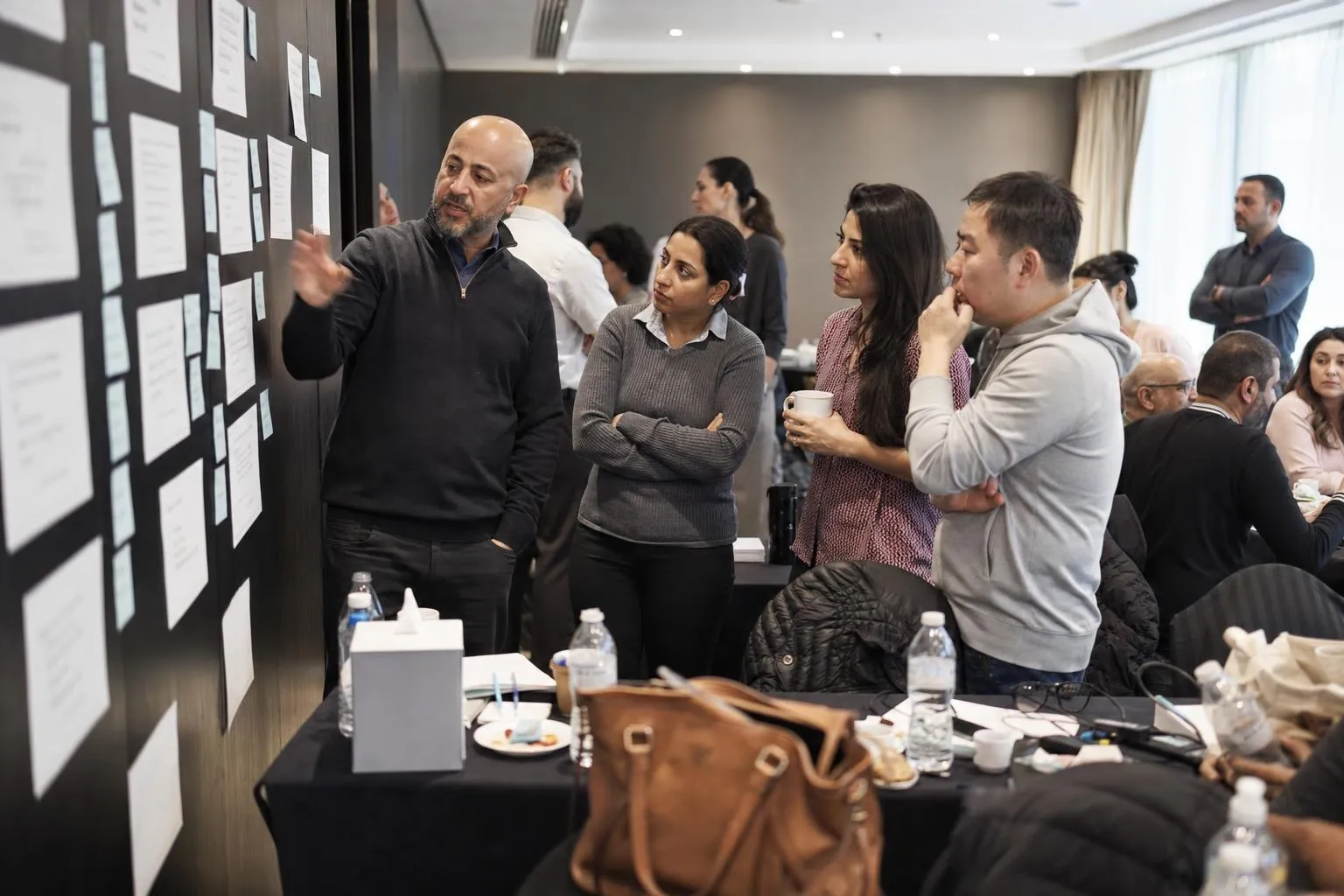
2. Open with the themes, not blank paper. Cluster the input into eight to twelve themes and put them on the wall before anyone arrives. The session starts with what the room already knows and will not say, instead of forty minutes of writing.
3. Spend most of the time on stop. Start lists grow without effort; everyone has an idea for something new. Stop lists are what nobody writes voluntarily, because every item on one belongs to somebody in the room. Allocate half the session to it and hold the time.
4. Force the trade. For every item added to start, the team names one item from stop that pays for it in time or money. A leadership team’s capacity is fixed; a start list with no matching stop is a plan to do more with the same people, and it will fail quietly in about six weeks.
5. Cut to five. Across all three lists, keep no more than five items. Everything else is recorded and parked. Twelve commitments are not twelve times as useful as one — they are zero, because nobody can hold them.
6. Name an owner, a date and a first step for each. Not a department — a person. Not “Q4” — a date. Not “review options” — the specific first thing that person will do on Monday.
7. Write it up within a week. A photograph of the wall before it comes down, and a written pack with the five commitments, owners and dates in everyone’s inbox within five working days. This is the step that decides whether the exercise worked, and it is the one most often skipped.
Where it sits in the day
Start, stop, continue is a good second or third session, not a first. It needs the room warmed up and honest, which is what the opening session — the themes from the pre-work — is for. In a full facilitated day the shape is:
| Time | Session |
|---|---|
| 09:20 | What we actually disagree about — interview themes on the wall |
| 11:00 | The trade-offs — decision work on the two or three real forks |
| 14:00 | Commitments — start, stop, continue, cut to five, owners and dates |
| 16:00 | How we work — meeting cadence, escalation, decision rights |
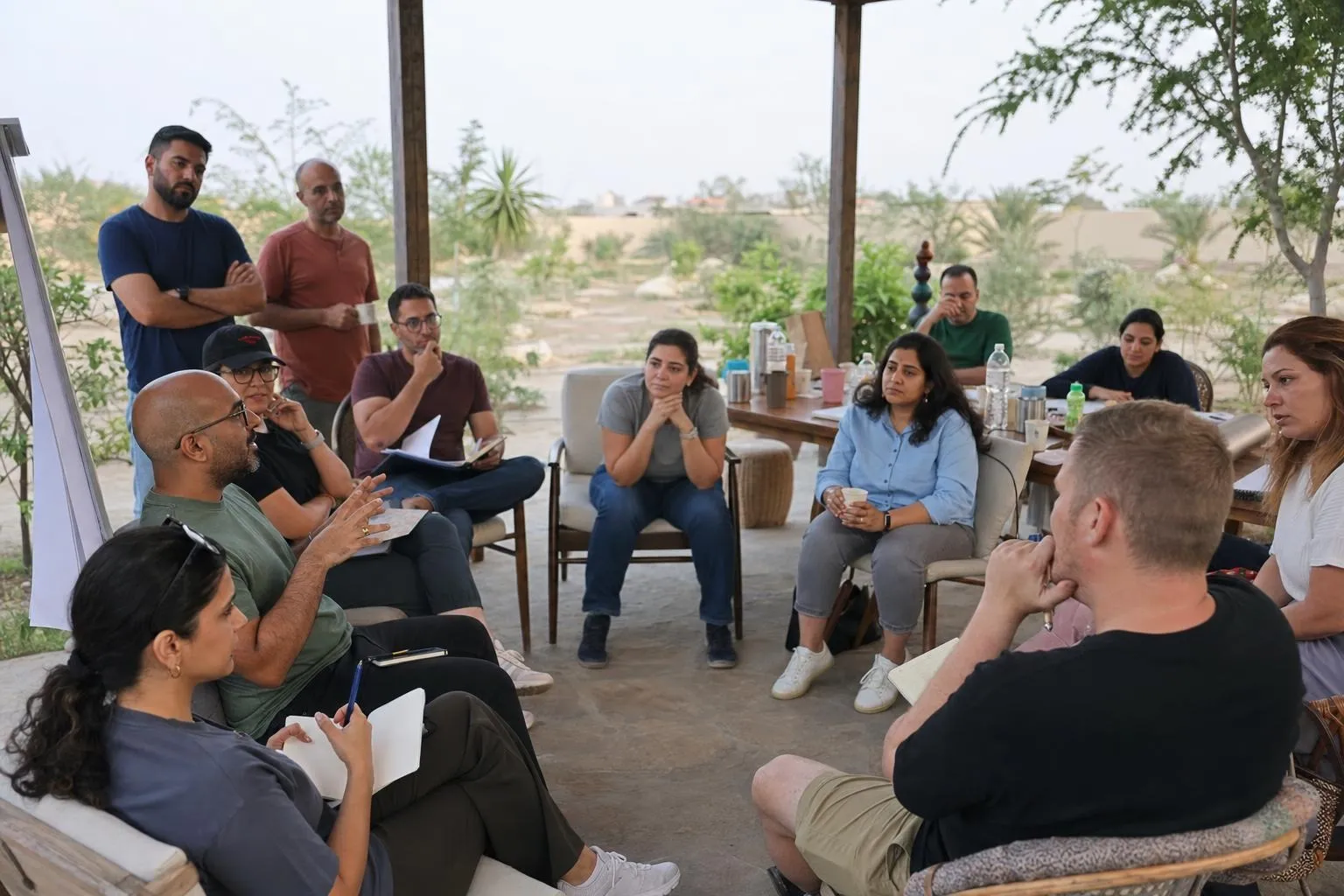
A facilitated day in this shape, with confidential pre-work, an independent practitioner and a written outputs pack within five working days, runs AED 890 per person at 12–19, AED 740 at 20–39 and AED 650 at 40 or more, excluding 5% VAT. The same facilitated day held at a private farmhouse instead of a hotel suite, with a BBQ dinner around the fire to close, runs AED 980 at 15–19, AED 870 at 20–34 and AED 780 at 35 or more.
Why a facilitator, for three questions
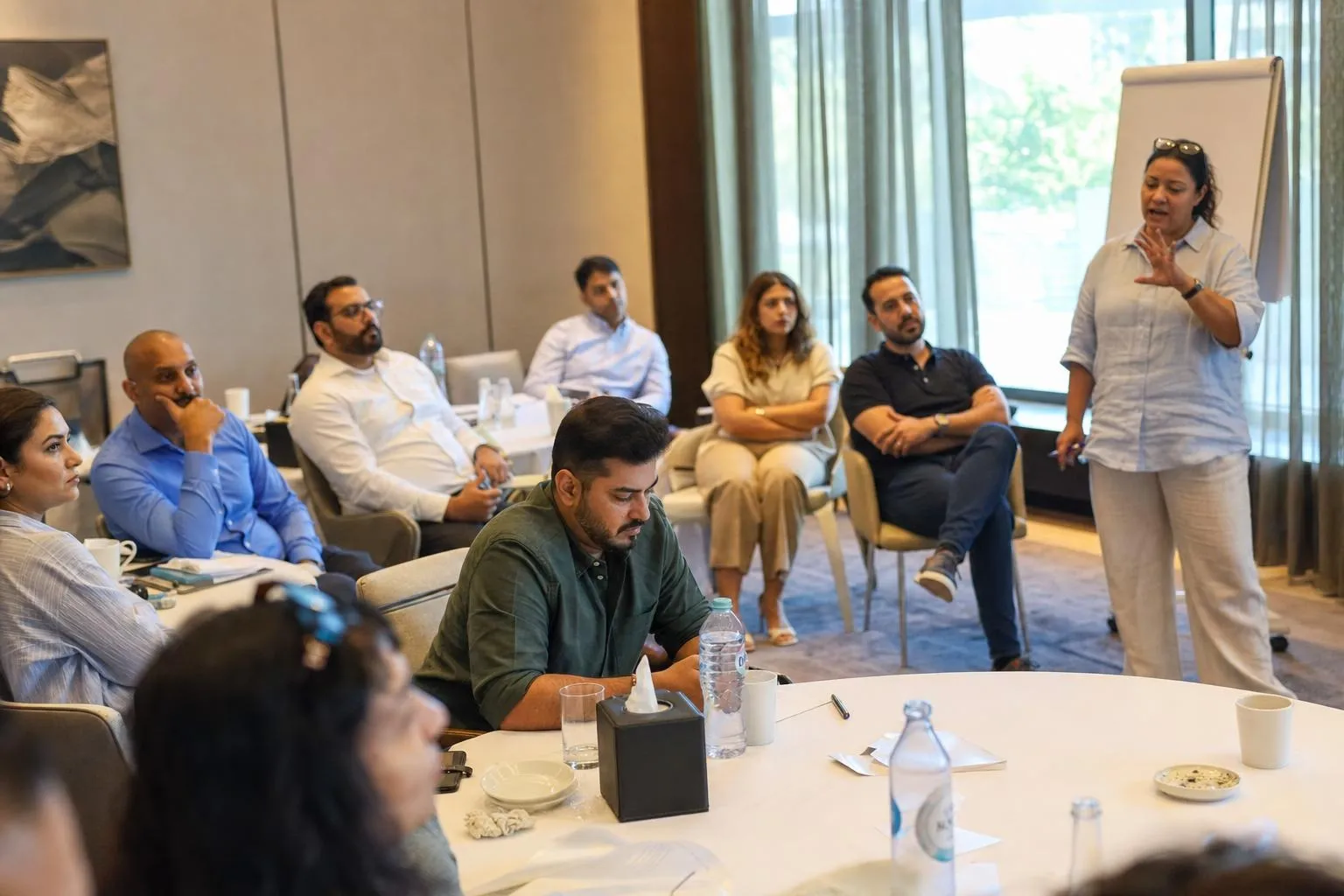
Because the person who runs start, stop, continue cannot also be in it. When the CEO or the HR lead facilitates, they are a participant with a stake in the stop list, and the room knows it. That is not facilitation; it is chairing. An independent practitioner who has already heard the input confidentially can put the difficult theme on the wall without anyone having to own it.
For the rest of the offsite — how long it should be, where to hold it, and the two ways it most often fails — see leadership offsite ideas, and an agenda that holds.
- Leadership
- Facilitation
- Offsites
- Playbooks
Common questions
- What is start, stop, continue feedback?
- A three-question retrospective: what should this team start doing, stop doing, and continue doing. Its strength is that it forces a change in both directions — something added and something removed — rather than a list of new initiatives. It works for a whole team or for an individual leader, and takes between forty-five minutes and two hours to run properly.
- What are examples of start, stop, continue for leaders?
- Start: making a decision in the meeting where it is discussed, with a named owner, rather than taking it offline. Stop: approving the same spend at three levels. Continue: the weekly thirty-minute pipeline review, because it is the one meeting that ends with actions. Good examples are specific enough that someone outside the team could check next month whether they happened.
- How do you run start, stop, continue at an offsite?
- Collect the input anonymously before the day, cluster it into themes, and open the session with the themes on the wall rather than asking people to write sticky notes in the room. Spend most of the time on stop, because it is the list nobody writes voluntarily. End with a named owner, a date and a first step for every item kept, written up and circulated within a week.
- Why does start, stop, continue fail?
- Three reasons. The input is collected in the room, so people write what is safe to say in front of their manager. The start list grows and the stop list stays empty, so the team leaves with more work. And nobody owns the output, so within a month it has decayed into different recollections of what was agreed.