What to wear to a team building day in the UAE
What to wear to a team building day in the UAE, activity by activity — desert, water, mountain, indoor sport, cultural visits — and what to put in the invitation.
The question organisers get most often in the week before any team day is not about the programme. It is “what do I wear?” — and the answer is almost never “whatever you like”, because a UAE team day usually moves between three climates: the sun outside, the air conditioning inside, and whatever the activity itself does to you.
What follows is what we tell people, by activity. The last section is what to put in the invitation so the question does not have to be asked forty times.
The universal kit
Whatever the day:
- Closed shoes with a grip. Trainers, not new ones. The single most common reason someone sits out an activity is footwear.
- A light layer. A UAE day moves between 38 °C outside and 19 °C in a coach, a venue or a restaurant. A thin long-sleeved top solves both — sun cover outdoors, warmth indoors.
- Sunglasses and a cap for anything outdoors.
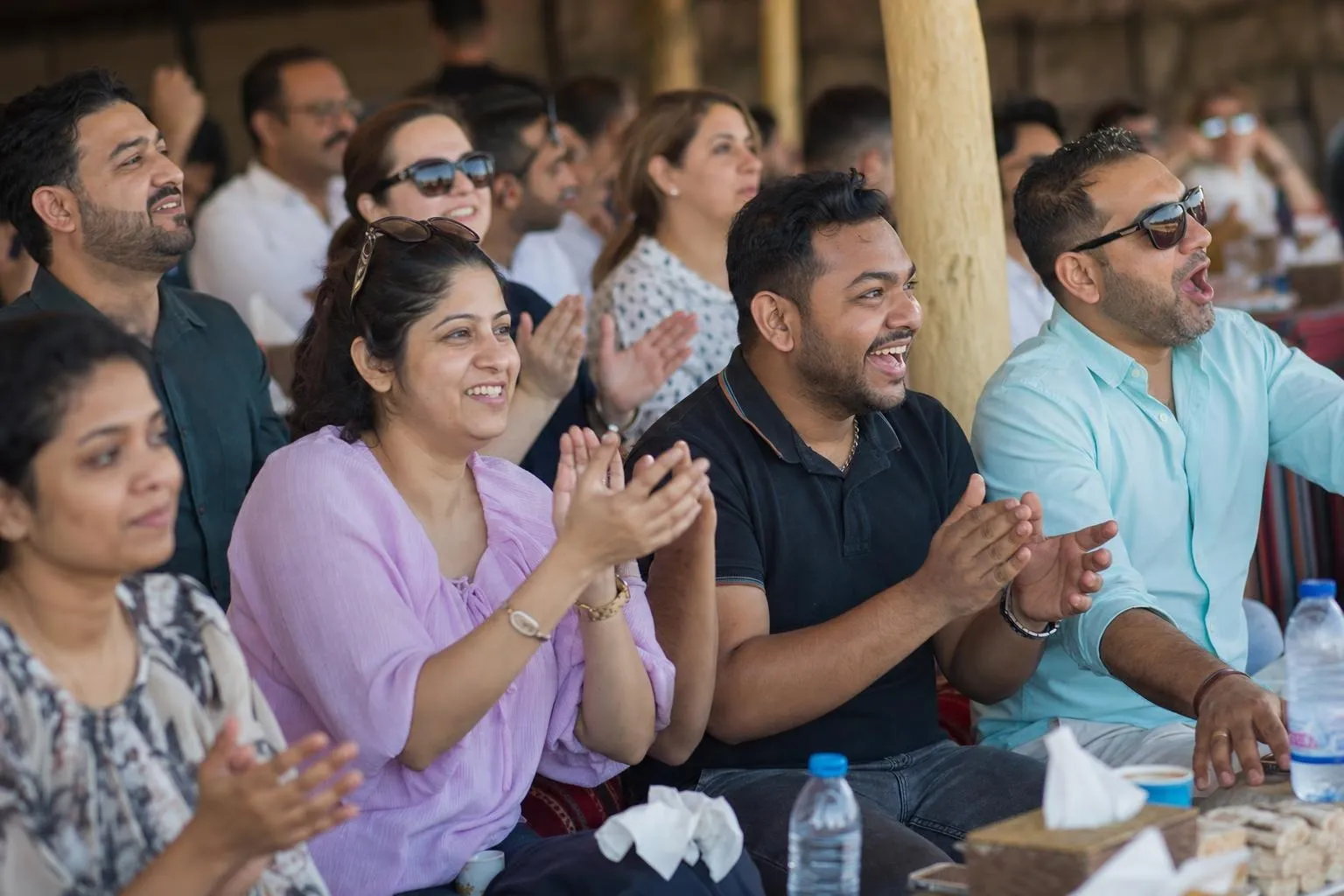
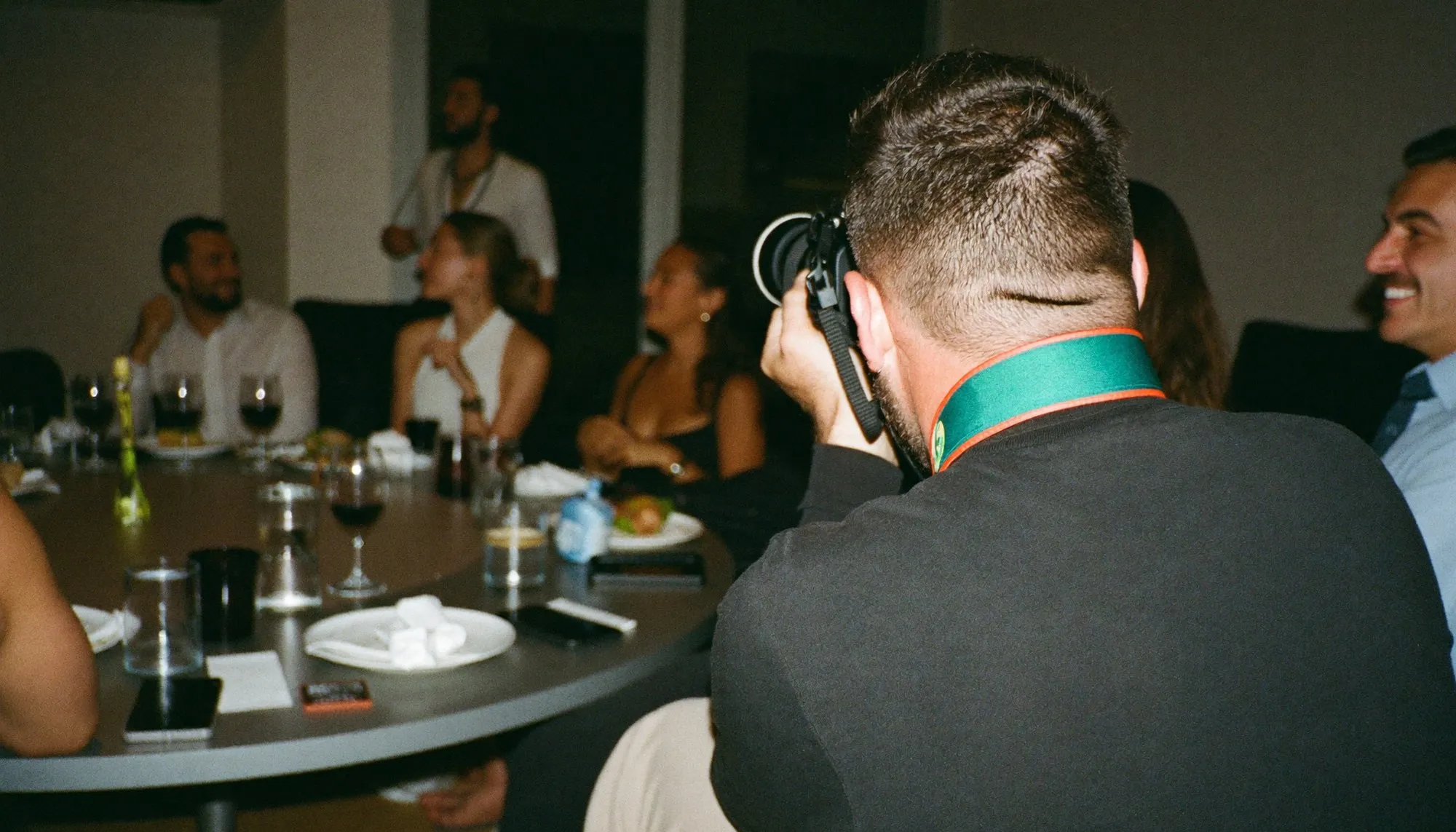
- Nothing you would mind being photographed in. Nearly every package we run includes a photographer, and the pictures end up on the company’s feeds.
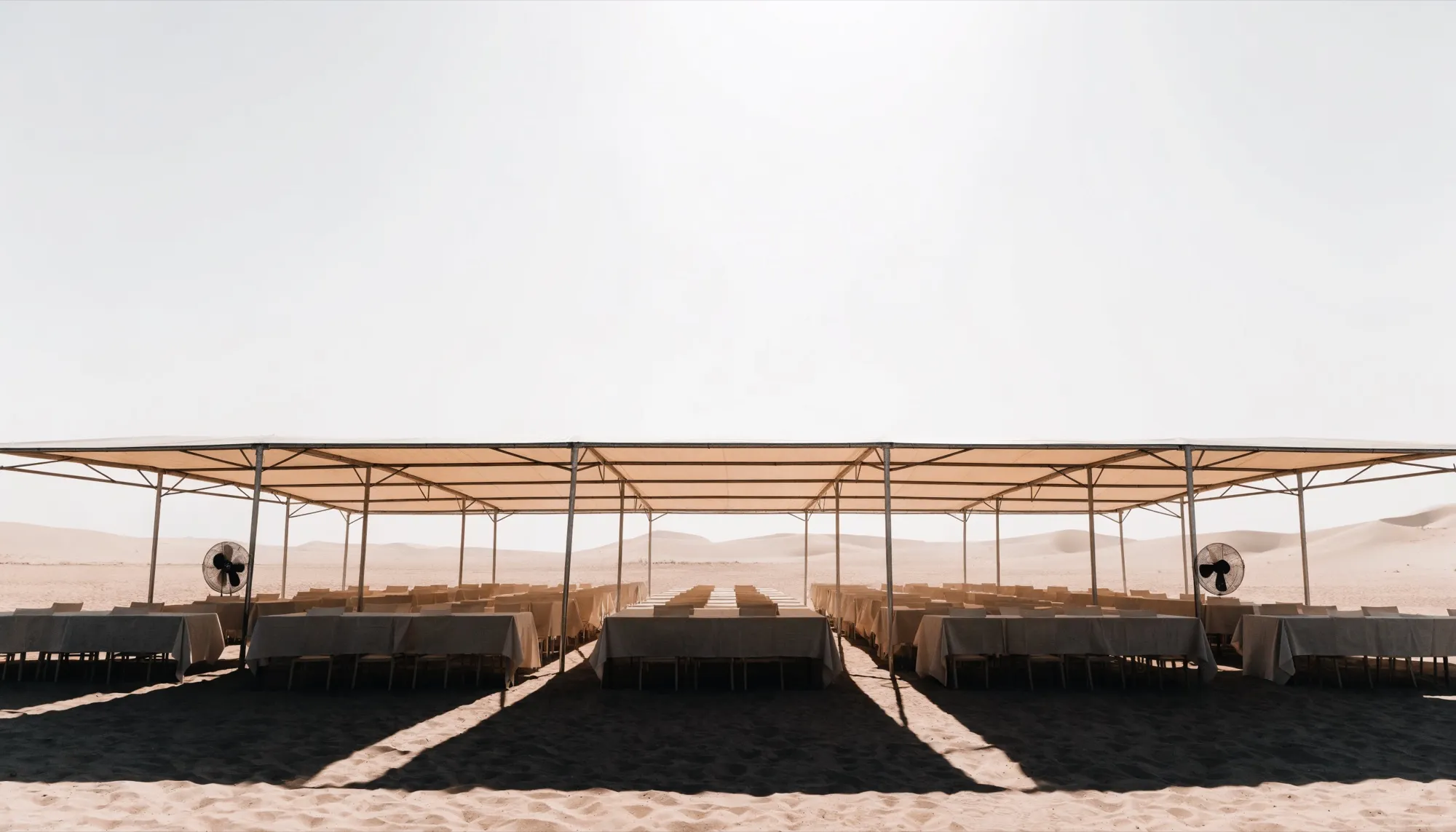
Desert
Wear: long, loose, light-coloured layers — linen trousers or light chinos, a cotton shirt. Trainers or closed sandals you can empty of sand. A scarf, which does triple duty as sun cover, a dust mask on the dune drive, and warmth after dark.
Bring: a jumper or fleece between December and February. The desert loses heat fast after sunset, and an evening that started at 28 °C can be in the low teens by the time dinner is served.
Avoid: white trousers (the sand is orange), anything tight for the camel ride, heeled or flimsy shoes.
Our corporate desert safari guide covers the rest of the evening.
Boat and dhow evenings
Wear: smart casual, and flat shoes. A deck moves, and heels on a deck are how ankles get turned. A layer for the wind once the boat is under way — it is always cooler on the water than on the quay.
If there is a swim stop: swimwear underneath, a cover-up over it, and a towel is usually provided. Swimming is always optional. Some colleagues will not swim in front of each other for personal or cultural reasons, and a good programme treats that as normal rather than as an exception.
Kayaking, wadis and water parks
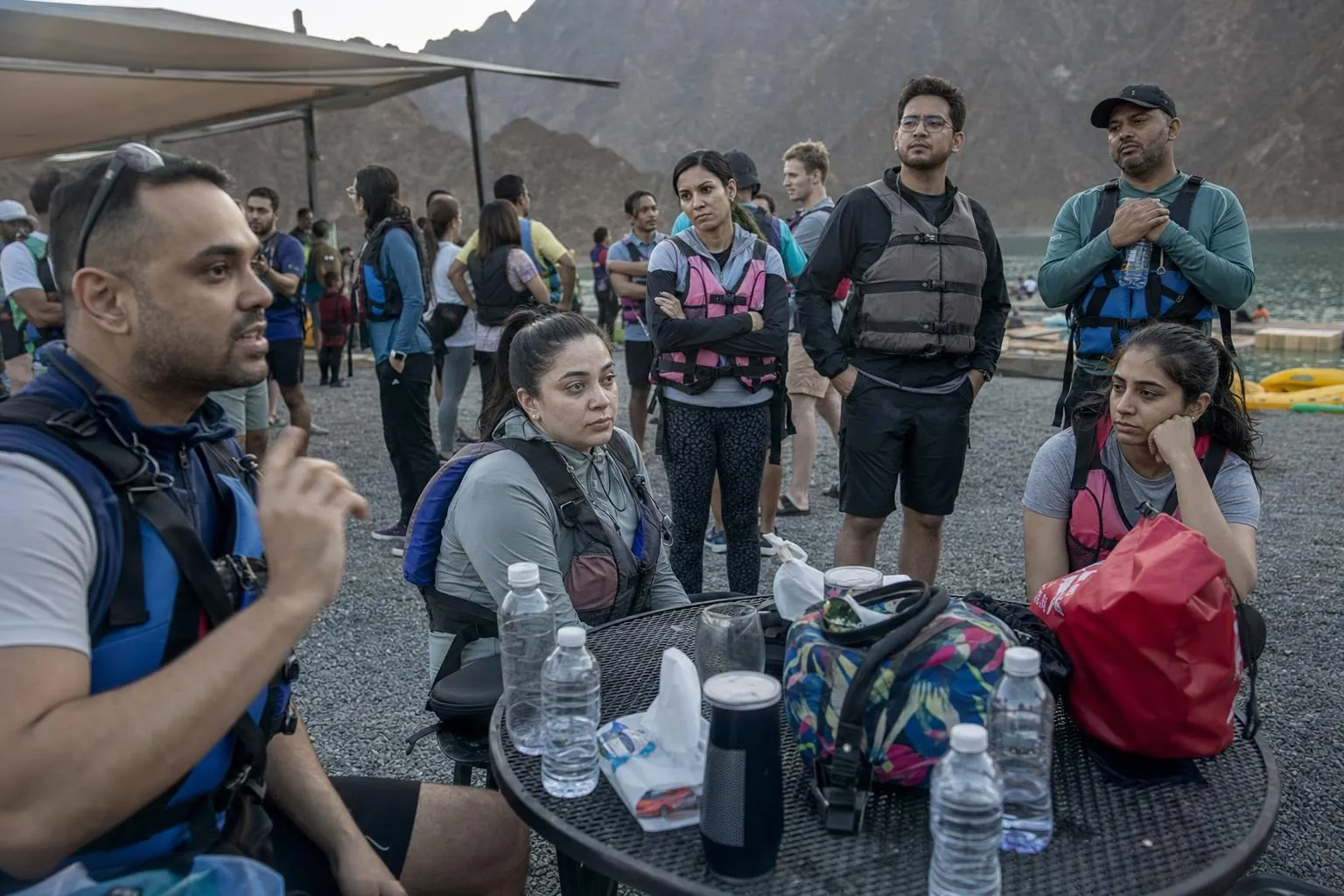
Wear: quick-dry sportswear — leggings or sports shorts, a synthetic top — that you are content to get fully wet. Water shoes or old trainers. You will get wet on a kayak even if you do not fall in.
Bring: a complete change of clothes and a bag to put the wet ones in. The coach home is air-conditioned, and forty minutes in a wet shirt at 19 °C is how a good day ends badly.
Avoid: cotton (it stays wet), jewellery, and anything in a pocket that cannot survive a dunking. Phones stay in a dry bag or on the coach.
Mountains: Jebel Jais and Hatta
Wear: proper closed trainers or walking shoes — mandatory for a zipline, and sensible on any trail. Sportswear with a light fleece.
Bring: a warmer layer than seems reasonable. The Jebel Jais viewing deck sits at 1,250 metres and is routinely around ten degrees cooler than Dubai on the same day; in January it can be properly cold. Hatta is milder but the mornings are cool from November.
Note: zipline operators weigh participants and set weight limits. Organisers should brief this discreetly in advance, never on the day in front of colleagues.
Indoor sport: padel, cricket, courts
Wear: sportswear and — this is the one people get wrong — shoes with non-marking soles. Indoor courts and pitches require them, and a venue can refuse someone in running shoes with black rubber soles. Padel or indoor court shoes are ideal. Check with the organiser before assuming ordinary trainers will pass.
Bring: a towel and a change of top. Equipment — rackets, bats, pads, helmets — is provided.
Cultural visits and heritage sites
Wear, for everyone: shoulders and knees covered, nothing sheer or tight. At a mosque visit, including the Sheikh Zayed Grand Mosque in Abu Dhabi, the standard is stricter: long sleeves and ankle-length clothing for men and women, and a headscarf for women. People should arrive already dressed for it rather than count on borrowing anything at the door. We brief this to every attendee in advance.
Shoes: comfortable walking shoes. A heritage day is several kilometres on foot, much of it on stone.
Indoor days: games, cooking, workshops
Office smart-casual, or a notch down from it. Closed shoes in any kitchen. A layer, because every air-conditioned venue in the country is set colder than people expect.
What to put in the invitation
The organiser’s job, and it saves the question being asked individually by everyone:
- One line on what to wear, specific to the activity — “sportswear and non-marking indoor shoes”, not “comfortable clothing”.
- One line on what to bring — a change of clothes, a layer, sunglasses.
- One line on what is provided — equipment, towels, water, sunscreen.
- A clear line that nothing is mandatory — nobody has to swim, climb or ride anything, and there is a role for anyone who sits out.
- Send it again 48 hours before. The first email is read by half the room.
If the day falls between May and September, the clothing is the smaller problem — the summer events guide covers which outdoor activities still work, and at what time of day.
- Dress code
- Logistics
- Field notes
- UAE
Common questions
- What should you wear for team building activities?
- Comfortable clothes you can move and sweat in, closed shoes with a grip, and a layer — because most UAE team building days move between hard sun and hard air conditioning. Beyond that it depends entirely on the activity: non-marking soles for indoor courts, clothes that can get wet for kayaking, long loose layers for the desert, and covered shoulders and knees for any cultural visit. The organiser should say which in the invitation.
- What should you not wear to a team building day?
- New shoes, anything white if there is water, sand or food involved, jewellery that can catch on equipment, and open sandals for anything with a zipline, a court or a climb. Branded or slogan clothing is best avoided too; the photographs will be used afterwards.
- Is there a dress code for corporate events in the UAE?
- For the event itself, only what the organiser sets. In public places — malls, heritage sites, parks — the expectation is modest clothing: shoulders and knees covered, nothing sheer or tight. At a mosque visit it is stricter: long sleeves and ankle-length clothing for everyone, and a headscarf for women. Swimwear belongs at the pool, the beach or on the boat, not on the walk between.
- How cold does it get on a UAE team building day?
- Colder than people pack for, in two places. The desert after sunset between December and February can drop to the low teens, and the Jebel Jais summit in Ras Al Khaimah is routinely ten degrees cooler than Dubai the same day. Indoors, air-conditioned venues are cold enough year-round that a light layer is worth carrying even in August.