What is team building, and why is it worth doing?
A plain definition of team building, how it differs from team bonding, the four kinds a UAE company can buy, and how to tell afterwards whether it worked.
“Team building” is used to describe everything from a paintball afternoon to a two-day leadership retreat, which is why so many companies buy one and cannot say afterwards whether it worked. A working definition fixes most of that.
The definition
Team building is any organised activity that puts colleagues in a situation where they have to work together on something that is not their normal job — so that they work together better on the job afterwards.
Two things follow from that sentence.
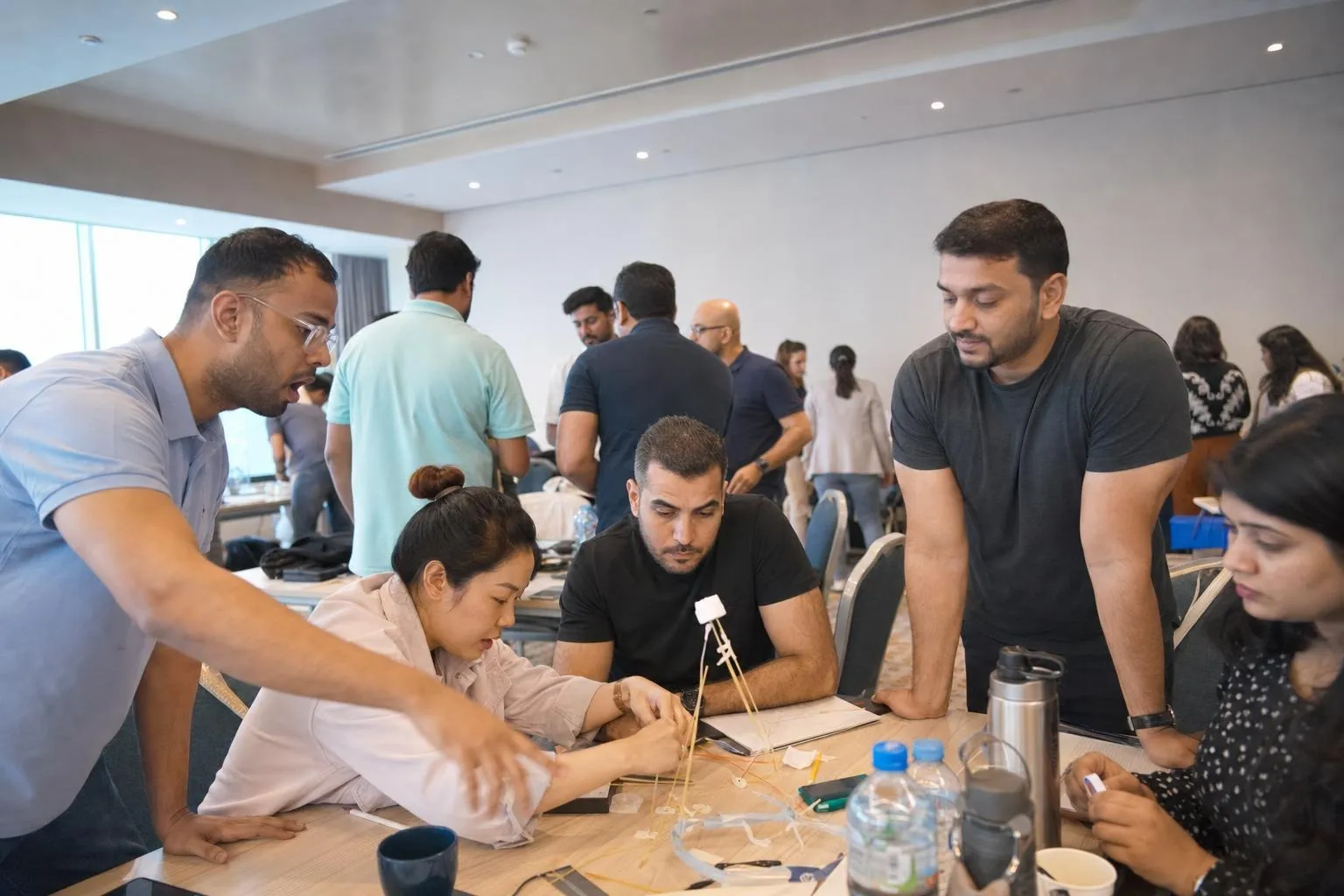
The activity is the method, not the point. Nobody books a cooking challenge because the company needs to learn to cook. They book it because six people from four departments have to divide a task, agree who does what and hit a deadline, and the kitchen makes that visible in ninety minutes instead of a quarter.
And the test is the Monday afterwards. If nothing is different about how the team talks, divides work or asks for help, it was an enjoyable afternoon. That is not nothing — but it is a different product, with a different name.
Team building versus team bonding
The two terms are used interchangeably. They should not be, because they buy different things.
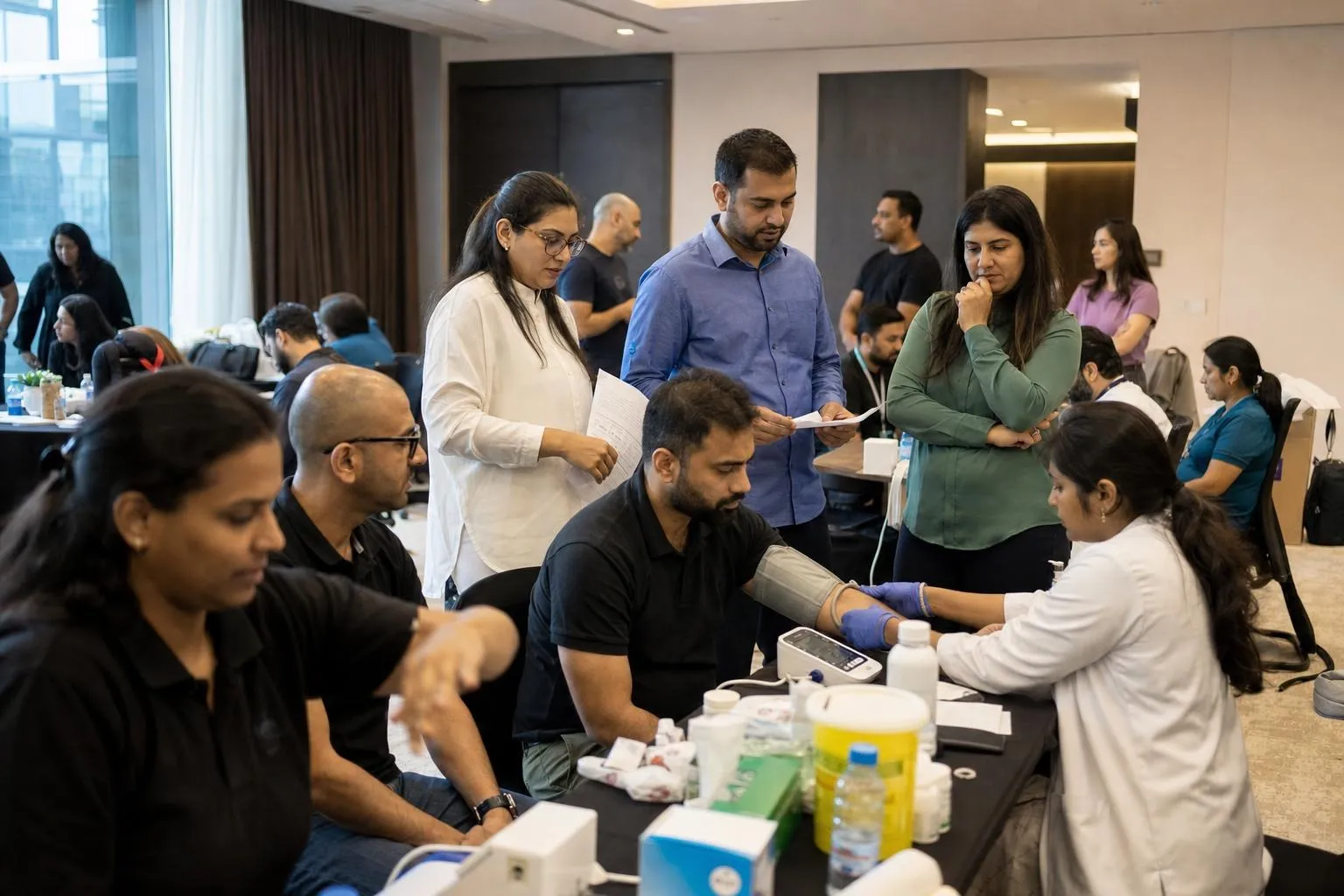
Team bonding is social. A shared dinner, an evening on a dhow, a theme park day. The only goal is that people know each other better, and it is measured by whether they talk across departments afterwards. It needs no facilitator, no debrief and no agenda.
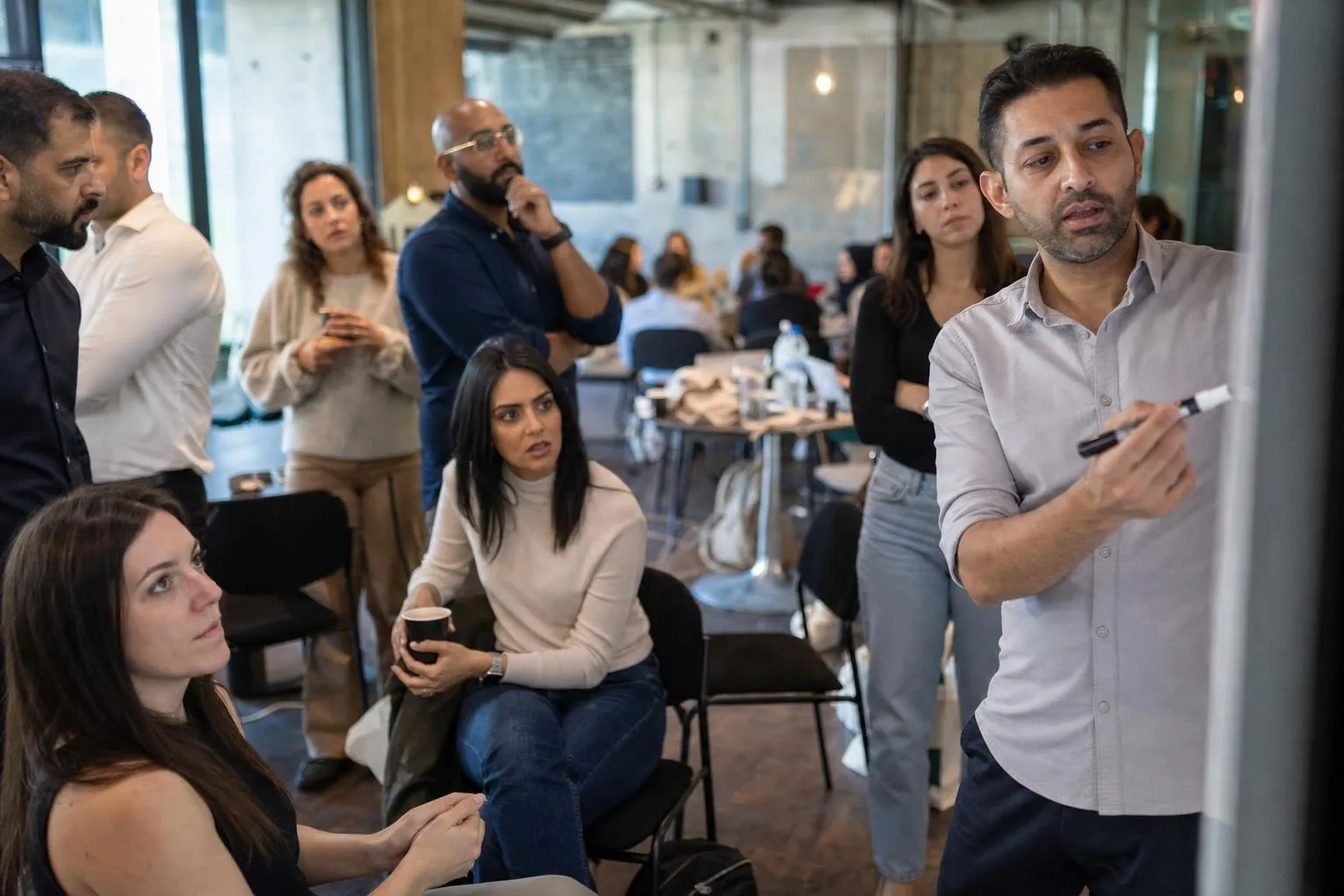
Team building has a working outcome. A task designed around how the team actually operates, a debrief on what happened, and — at the serious end — a facilitated conversation with a written output.
Neither is superior. Bonding is cheaper, easier to organise and exactly right after a hard quarter or when a team has grown fast and half of it has never met. Building is what to buy when there is a specific problem: two departments that do not hand work over cleanly, a new manager whose team is not yet a team, a leadership group that has stopped agreeing with itself.
The mistake is buying one and expecting the other. A desert evening will not fix a broken handover process, and a facilitated debrief is a strange way to celebrate a record year.
The four kinds you can buy
Per person, excluding 5% VAT, at the group sizes stated.
Structured competition. Mixed teams of five to seven rotate through short timed stations against a running scoreboard. The most common format, because it works with any age, fitness or seniority mix. A four-and-a-half-hour indoor version runs AED 420 at 15–29, AED 300 at 30–59 and AED 260 at 60 or more. What makes these games work with adults covers the design rules.
Shared experience. A desert evening, a mountain day, a kayak on Hatta dam. This is the bonding end of the spectrum, and the UAE is unusually good at it between October and April. A desert evening with dinner starts at AED 280 at 10–29, falling to AED 190 at 60 or more.
Facilitated sessions. An activity chosen because it produces observable behaviour, an independent practitioner watching it, and a debrief on what they saw — who had the answer and did not say it, where information got lost. Four private escape rooms with a facilitated debrief run AED 530 at 16–29, AED 470 at 30–47, AED 420 at 48 or more. This is the format that most reliably changes something on Monday.
Whole-company formats. Above fifty people the job changes: mixed teams across the whole organisation, several disciplines running at once, a closing prize-giving. A six-hour games day runs AED 620 at 50–99, AED 480 at 100–199 and AED 400 at 200 or more, October to April.
Why it is worth doing at all
The honest case is narrower than most brochures make it, and stronger for being narrow.
Teams never practise. A football team trains four times for every match. A working team only ever does it live — with real stakes, real deadlines and the hierarchy of an ordinary meeting in the room. A session gives them a low-stakes version of the same problem, and the behaviour it surfaces is usually the same behaviour that slows them down at work.
Cross-team relationships are the thing an organisation chart cannot create. Most delays inside a company are two people who do not know each other well enough to pick up the phone. A day that puts finance and operations on the same team produces exactly those relationships, and they outlast the event by years.
New joiners arrive into a team that has history they do not share. In a UAE company, where turnover is high and teams are rebuilt every year or two, that is a permanent condition rather than an occasional one. A shared day is the fastest way to give a new hire the history.
What team building does not do is fix a structural problem. If the team is under-resourced, badly led or paid unfairly, a day out will be read as a substitute for fixing it, and it will make things worse.
How to tell whether it worked
Decide before the day which of these you are looking for, and check it three weeks later.
- People who did not talk now talk. The easiest to see and the most common result of a well-mixed day.
- A specific behaviour changed. The debrief named something — decisions being made by whoever speaks first, say — and the team has a stated fix for it. You can observe whether that fix is being used.
- A written commitment exists. Only facilitated formats produce this, and it is the only artefact that reliably survives contact with the following month.
If none of the three is present, the event may still have been worth it as a reward. It was not team building.
Where to go next
If you are deciding what to run rather than what the term means, team building activities in Dubai sorts the market by season and budget, and how much team building costs works through the four things that move the price.
- Team building
- Definitions
- Guides
Common questions
- What is team building?
- Team building is any organised activity that puts colleagues in a situation where they have to work together on something that is not their normal job, so that they work together better on the job afterwards. The activity is the method, not the point. The point is a change in how the team communicates, divides work or trusts each other on the Monday after.
- Why is team building important?
- Because most teams never practise working together — they only ever do it live, with real stakes, inside the hierarchy of ordinary meetings. A good session gives people a low-stakes version of the same problem, lets them see how the group actually behaves under a clock, and builds the cross-team relationships that make the next real problem faster to solve. A badly designed one achieves none of that, which is why the design matters more than the activity.
- What is the difference between team building and team bonding?
- Team bonding is social: a shared meal, a boat evening, a day out, where the only goal is that people know each other better. Team building has a working outcome: a task, a debrief, or a facilitated conversation about how the team operates. Both are legitimate. Bonding is cheaper and easier to run; building is what to buy when there is a specific problem to fix.
- What are team building activities?
- They fall into four families: structured competitions and games, where mixed teams race a clock; shared experiences, such as a desert evening or a mountain day; facilitated sessions, where an independent practitioner observes the team and debriefs what they saw; and whole-company formats such as a games day for a hundred or more. In the UAE they range from about AED 190 per person for a desert evening at 60 people to AED 1,450 for a scenario-based leadership day at 15 to 24, excluding 5% VAT.